
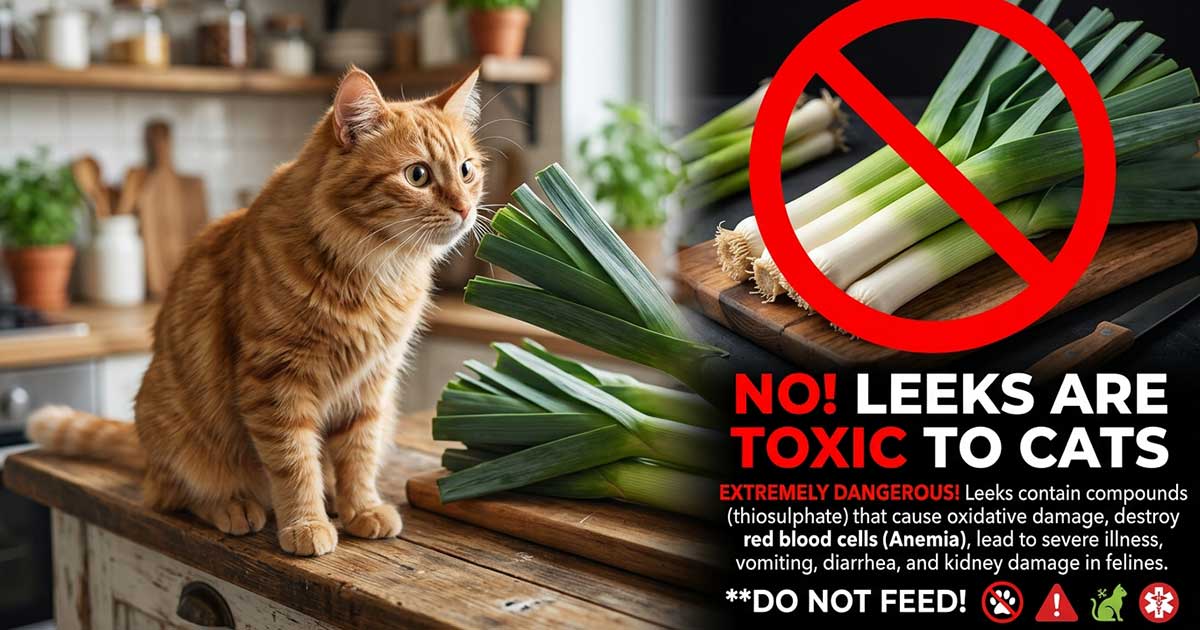
Hello, purr-fect pet parents! Today, we’re diving into the question that’s been whisking around the cat community: Can cats eat leeks? The short answer is no, they can’t, and here’s why.
Why Leeks Are Off the Menu for Cats
Leeks belong to the allium family, which also includes onions, garlic, and chives. All these veggies are toxic to our feline friends. Here’s what happens when cats ingest allium vegetables:
- Damage to Red Blood Cells: Cats lack the enzyme that dogs and humans have to break down the toxins in alliums. When ingested, these toxins attack and damage the cat’s red blood cells.
- Anemia: The damage to red blood cells can lead to anemia, a condition where the cat’s body doesn’t have enough healthy red blood cells to carry oxygen.
- Symptoms: Symptoms of allium toxicity in cats can include lethargy, weakness, pale gums, rapid breathing, and collapse.
Warning: Keep all allium vegetables out of your cat’s reach, and avoid using them in their food.
How Much Is Safe?
The amount it takes to poison a cat can vary, but even a small amount can be toxic. A cat that weighs 5 pounds only needs to ingest about 0.5 teaspoon of garlic or 1 teaspoon of onion or leek to be at risk.
Remember: Cats are curious and might nibble on your leftover salad or steal a piece of garlic bread. It’s best to keep all allium products away from your cat to avoid any potential harm.
Frequently Asked Questions
1. What should I do if my cat accidentally eats leek?
If you suspect your cat has ingested leek or any other allium vegetable, contact your veterinarian immediately. They may recommend inducing vomiting, or they might perform additional tests to check for anemia.
2. Are cooked leeks safe for cats?
No, cooked leeks are still toxic to cats. Cooking doesn’t reduce the toxicity of allium vegetables. In fact, some cats might be more attracted to the smell of cooked alliums, increasing the risk of accidental ingestion.
3. Can cats have other vegetables?
Yes, cats can have other vegetables, but monitor their intake and ensure they’re cat-safe. Some cat-friendly veggies include cooked sweet potatoes, pumpkin, and green beans. Always introduce new foods gradually and in moderation.
Stay purr-sistent in keeping your cat safe by sticking to cat-safe foods and consulting with your vet before making any significant changes to your cat’s diet.