
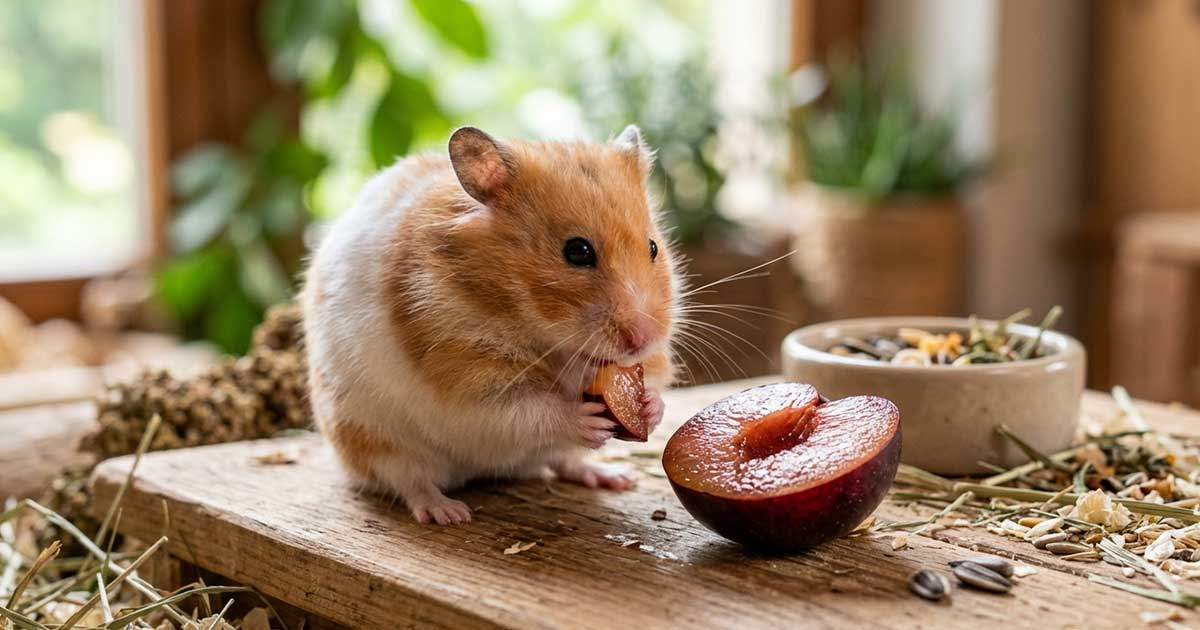
It’s a common question among pet owners – can hamsters eat plum? While it might seem like a harmless treat, the answer is a resounding no. Let’s explore why plums are not suitable for our furry friends.
Why Can’t Hamsters Eat Plums?
Plums might seem like a healthy fruit choice, but they contain two main ingredients that make them unsuitable for hamsters – pits and high sugar content.
- Pit: The Toxic Element – The pit or stone of a plum contains amygdalin, a toxic substance that can be harmful to hamsters. If ingested, it can cause serious health issues, including seizures and even death.
- High Sugar Content: A Sweet Concern – Plums are high in sugar, with one medium-sized plum containing about 7 grams. While this might not seem like much, it’s a significant amount for a hamster, considering their tiny size and low-sugar diet.Feeding plums to your hamster can lead to obesity, dental issues, and even diabetes. It’s best to stick to hamster-safe fruits and vegetables to ensure their health and well-being.
How Much Is Safe? None!
Even a small piece of plum pit can pose a serious risk to your hamster. The high sugar content in the flesh is also something to avoid. It’s best to steer clear of plums altogether when it comes to your hamster’s diet.
Frequently Asked Questions
What Can I Feed My Hamster Instead?
There are plenty of hamster-safe fruits and vegetables that you can introduce to your hamster’s diet. Some popular choices include:
- Apple (without seeds or core)
- Banana
- Carrot
- Broccoli
- Spinach
What Should I Do If My Hamster Eats a Plum Pit?
If you suspect your hamster has eaten a plum pit, monitor them closely for any signs of illness. Symptoms can include lethargy, seizures, or difficulty breathing. If you notice any of these signs, contact your vet immediately.
Can I Feed My Hamster Dried Plums?
No, dried plums (also known as prunes) are even higher in sugar than fresh plums and should also be avoided. Stick to hamster-safe treats and consult with your vet if you’re unsure about any food items.