
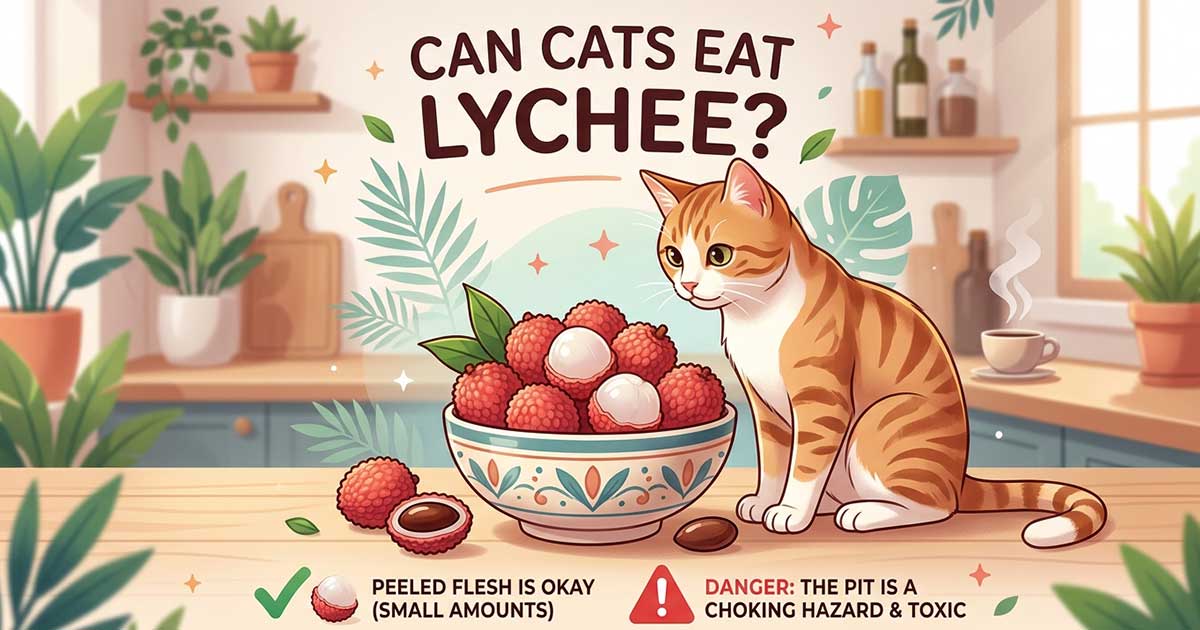
Hello, pet parents! Today, we’re diving into the world of fruits and exploring a question we often get asked: Can cats eat lychee? The short answer is no, but we’re here to explain why and to ensure your feline friend stays safe and happy.
Why Lychee is Not Recommended for Cats
- Toxic Pit: The pit of a lychee fruit contains hydrocyanic acid, which is highly toxic to cats. Even the smallest amount can cause serious health issues, including vomiting, diarrhea, and even more severe symptoms.
- No Nutritional Value: Even if you manage to remove the pit, the flesh of the lychee fruit provides no nutritional benefit to cats. In fact, it’s mostly water and sugar, which can lead to obesity and other health problems if fed regularly to your cat.
Given these reasons, it’s best to keep lychee out of your cat’s diet. Instead, stick to cat-safe fruits like bananas, blueberries, or apples (without the seeds or core).
How Much Is Safe? None, Actually!
You might be wondering, “What if I remove the pit and only give my cat a tiny bit of the flesh?” While it’s true that a small amount might not cause immediate harm, it’s still not recommended. Cats are small, and even a tiny bit of toxic substance can have a big impact on their health. Plus, it’s always best to avoid the risk altogether.
Frequently Asked Questions
1. Can Kittens Eat Lychee?
No, kittens should not eat lychee either. In fact, they’re even more sensitive to toxins than adult cats, so it’s especially important to keep lychee away from them.
2. What Should I Do If My Cat Ate Lychee?
If you suspect your cat has ingested lychee, especially the pit, contact your vet immediately. They can provide guidance based on the amount consumed and your cat’s size and health. In some cases, they may recommend inducing vomiting, but only do so under their guidance.
3. Are Other Fruits Safe for Cats?
Not all fruits are off-limits, but it’s still important to be cautious. Some fruits, like apples and bananas, can be given in moderation, but always remove any pits, seeds, or skins that could cause harm. Always consult with your vet before introducing new foods to your cat’s diet.